New Publication – Direct Thermochemical Liquefaction of biomass – Characteristics, processes and technologies
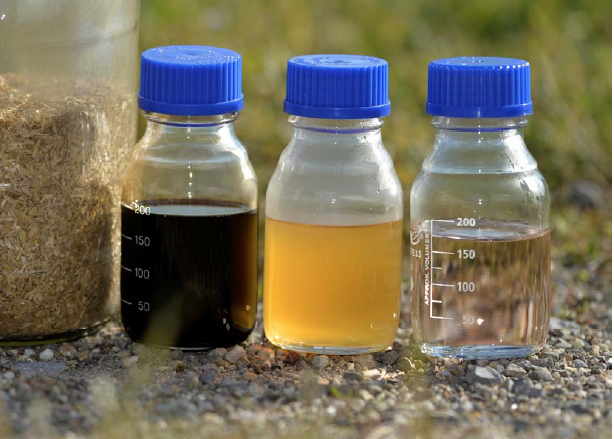
Direct Thermochemical Liquefaction (DTL) is using heat to break down the polymers in solid biomass to form a liquid that can be used as an energy carrier or chemical feedstock. Fast pyrolysis and hydrothermal liquefaction (HTL) are two examples of DTL to form bio-oils and bio-crudes respectively. It is also possible to degrade and solve biomass feedstocks in organic solvents, which can be referred to as solvolysis. DTL processes produce a large variety of fragments from the initial biopolymers and the resulting bio-oil is a multi-component mixture of chemically different molecules. It intrinsically avoids the use of chemicals and is viewed as robust enough to decompose a large variety of different feedstocks.
This brochure – Direct-Thermochemical-Liquefaction-Brochure-final – explains some of the characteristics of different DTL processes, options for conditioning of the bio-oil, and perspectives of DTL as a key enabling technology to access biogenic resources for a future bioeconomy.