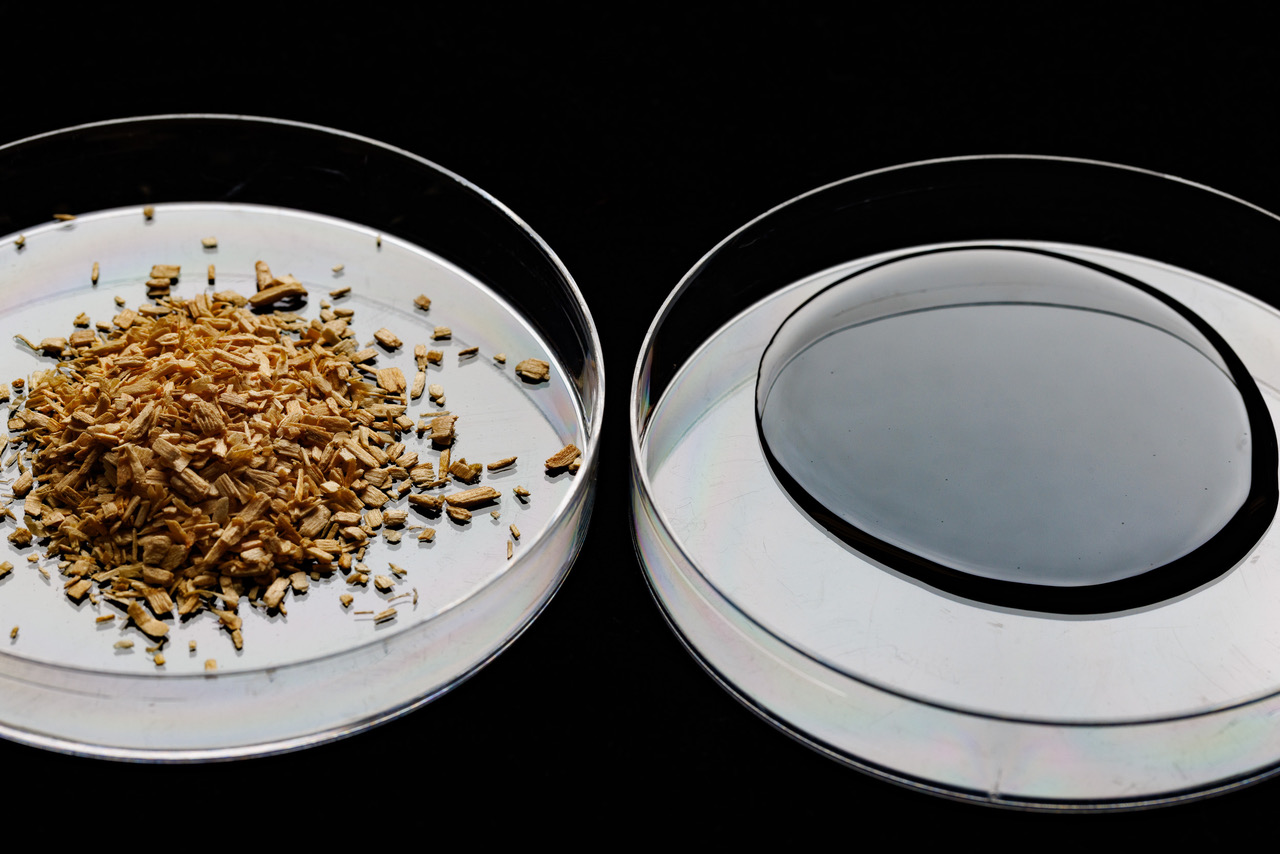
Direct Use of Fuels from Direct Thermochemical Liquifaction Liquids
This report assesses the fuel properties of pyrolysis-based and Hyrothermal Liquification (HTL) based liquids (liquids from so-called Direct Thermochemical Liquefaction – DTL). While over hundred million liters of DTL liquids are currently produced annually, primarily substituting conventional fuel oils in stationary applications, the focus for research is increasingly on producing biofuels that can replace liquid transportation fuels from fossil sources. This reshifted focus requires reducing the oxygen content of DTL liquids to increase their Higher Heating Values (HHVs) to levels closer to liquid fossil fuels (> 40 MJ/kg). Short-term market penetration is targeted through the production of “drop-in” biofuels or by blending DTL fuels with fossil fuels, which is the focus of this report.
Download the full report Direct Use of Fuels from Direct Thermochemical Liquifaction Liquids”
This research is carried out by IEA Bioenergy Task 34 (Direct Thermochemical Liquefaction).
Fuel Properties and Application Potential
The report assesses the fuel properties of pyrolysis-based and HTL-based DTL liquids.
Pyrolysis-Based Technologies: Traditional fast pyrolysis bio-oils typically contain high water (15–30 weight.%) and oxygen (44–60 wt.%) content, resulting in rather low higher heating values (HHVs, 15–20 MJ/kg). However, they benefit from low sulphur content (<0.05 wt.%), which is considerably lower than standard marine fuels. Catalytic pyrolysis significantly improves the fuel quality by reducing oxygen and separating an aqueous phase. The resulting organic phase typically has water content between 3 and 7 wt.%, and if severely upgraded, the HHV can exceed 30 MJ/kg. Despite these improvements, catalytic bio-oils generally remain unsuitable as stand-alone drop-in fuels for transportation due to non-compliant properties like viscosity and acid number. Their best immediate application lies in the marine sector, particularly for blending with residual fuels. Many catalytic bio-oils fall within the acceptable kinematic viscosity range for bio-residual marine fuels (20–150 cSt compared to the ISO 8217 maximum of 500 cSt).
Hydrothermal Liquefaction (HTL) Technologies: HTL yields a viscous “biocrude,” which, due to its properties, is often conceptualised as a biomass-derived counterpart to fossil crude oil. While HTL biocrude has a relatively high HHV (the produced biocrude retains up to 70% of the original biomass energy content), its direct use is typically challenging without upgrading. For the whole biocrude, the only foreseeable application is as a marine residue fuel. A critical constraint is the high acidity, with Acid Numbers (AN) often several times higher than the stringent ISO 8217 limit of 2.5 mg KOH/g. Blending HTL biocrude with marine residual fuels is possible, though tests have shown that even a 10% blend can critically raise the ash content and AN. Fractional distillation of non-upgraded biocrude yields fractions suitable for diesel blending, but high levels of heteroatoms (oxygen, nitrogen, and sulfur—especially from non-lignocellulosic feedstock) severely limit the maximum blending ratio with conventional diesel (EN590) to minimal proportions (e.g., 0.3 wt.% due to sulphur limits).
Conclusion and Policy Implications
In general, DTL fuels from catalytic pyrolysis and HTL hold significant potential, particularly for marine fuel applications, offering a short-term pathway to reducing greenhouse gas emissions through partial substitution (blending). Key properties requiring further attention to enable wider adoption are the acid number, water content, and miscibility/compatibility of DTL fuels with fossil streams.
Key Highlights for Policymakers
Harness Blending Potential for Marine Decarbonisation:
Direct Thermal Liquefaction (DTL) liquids (especially from catalytic pyrolysis and HTL) present a viable near-term solution for decarbonising the marine sector through blending with residual fuels. Policymakers should focus on supporting research to determine the achievable blending limits for various DTL qualities. Notably, DTL liquids derived from lignocellulosic biomass offer inherently low sulfur content, aiding compliance with modern VLSFO/ULSFO regulations.
Adapt Fuel Standards to Bio-Origin Fuels:
Existing fuel standards (such as ISO 8217) and their associated test methods were developed for fossil fuels and are often ill-suited for characterising DTL liquids, creating a significant barrier to commercialisation. Policy action is required to validate or modify standard test methods—particularly for acid number (to distinguish corrosive acids from non-problematic ones) and miscibility/compatibility—to facilitate the accurate assessment and increased use of DTL fuels.
Download the full report Direct Use of Fuels from Direct Thermochemical Liquifaction Liquids”