

The trade-offs between utilisation and storage of captured biogenic CO2
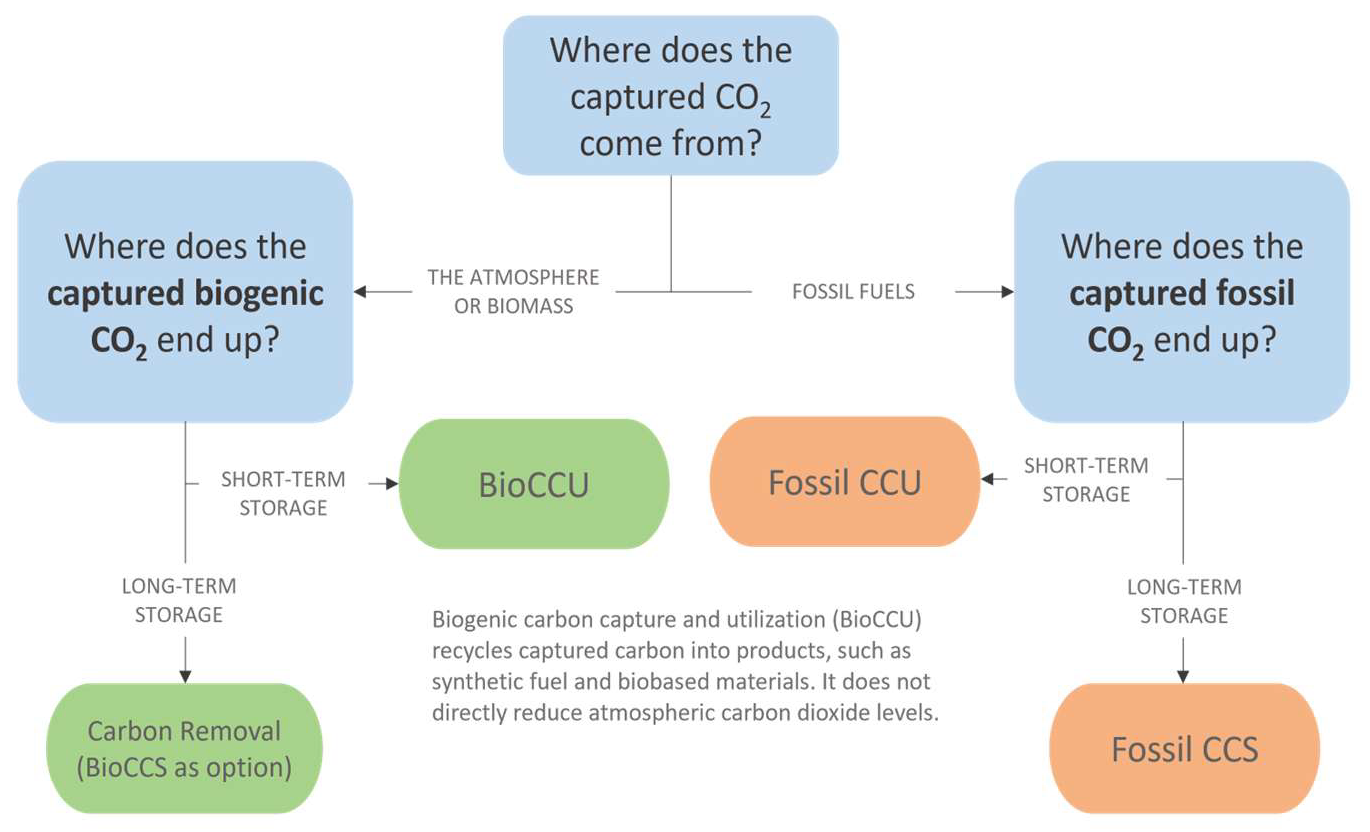
Bioenergy combined with carbon capture represents a critical pillar in achieving net-zero and ultimately net-negative emissions. Bioenergy with carbon capture and storage (BECCS) offers permanent carbon removal, while bioenergy with carbon capture and utilisation (BECCU) contributes to fossil carbon substitution through the creation of renewable fuels and materials. Determining “when to store and when to utilise” depends on economic, policy, technological and infrastructural factors.
A strategic IEA Bioenergy project dedicated to addressing questions around biogenic carbon management was formed between two tasks, Task 40 (Deployment of biogenic value chains and carbon management) and (Task 45: Climate and Sustainability Effects of Bioenergy within the Circular Bioeconomy). Researchers of Task 40 and Task 45 published a report on these dimensions and analysed from the perspective of CO₂-emitting sites, guided by emerging policy frameworks and early implementation experiences in Sweden, Denmark, and Norway.
Download the full report: The trade-offs between utilisation and storage of captured biogenic CO2
The trade-offs between bioenergy with carbon capture and storage (BECCS) and bioenergy with carbon capture and utilisation (BECCU), collectively referred to as BECCUS are examined, and the contexts in which captured biogenic CO₂ should be permanently stored versus when it should be utilised are explored in this report.
At the EU level, an evolving regulatory framework underpins BECCUS deployment:
- The EU Carbon Removal Certification Framework (CRCF) establishes the first EU-wide standard for certifying permanent carbon removals such as BECCS.
- The Industrial Carbon Management Strategy (2024) sets milestones for industrial CO₂ storage capacity (≥50 Mt/year by 2030) and aims for economically viable value chains by 2040.
- The Renewable Energy Directive (RED III), ReFuelEU Aviation, and FuelEU Maritime incentivise CO₂-based synthetic fuels through blending mandates and multipliers for renewable fuels of non-biological origin (RFNBOs).
- Emerging instruments, such as the Empowering Consumers for the Green Transition Directive and Green Claims Directive, will define what types of climate claims companies can make—critical for voluntary carbon markets and corporate offsetting.
These frameworks increasingly differentiate between storage and utilisation pathways, shaping the business case for BECCS and BECCU respectively.
Some key findings for policy makers:
- BECCS is indispensable for achieving net-negative emissions and offsetting residuals in hard-to-abate sectors.
- Stable, long-term funding mechanisms, such as reverse auctions or subsidies per tonne CO2 sequestered, are critical to accelerate deployment. EU funding, for example EU Innovation fund or similar, can also provide vital revenue streams.
- Private-public partnerships are proving decisive -linking corporate offtakes with public support to unlock bankable projects.
- Policy coherence across the Carbon Removal Certification Framework (CRCF), Emission Trading System, Renewable Energy Directive (RED), and industrial carbon management frameworks is essential to prevent conflicting incentives.
- Cross-border CO2 transport and storage agreements (e.g. between Sweden, Denmark, and Norway) are enabling first regional BECCS value chains.
- Various revenues streams can support a successful realisation of BECCS projects, including: (1) Specific state support mechanisms (i.e. per tonne CO2 subsides), 2) broader R&D support (i.e. EU Innovation fund), 3) voluntary carbon markets (i.e. CDRs).
- Current business models favour BECCS. BECCU provides transitional value, sufficient willingness-to-pay for e-fuels has yet to materialise.
Other reports on biobased energy, carbon capture, utilisation and storage: