IEA Bioenergy Workshop: Scaling Asia-Pacific Bioeconomies
Background
Achieving net zero emissions while developing and maintaining secure, affordable and resilient energy systems is one of the defining challenges faced by the global community.
Bioenergy and renewable carbon will play an essential role in mitigating climate change and are necessary to replace fossil fuel use in aviation, shipping, heavy industry and other sectors where electrification alone is unlikely to be sufficient. However, a developed system of operation of sustainable supply chains, matching supply and demand, has not yet fully materialised: the resources, infrastructure, industrial capability and markets, required to deliver and deploy these energy and carbon carriers, are not evenly distributed.
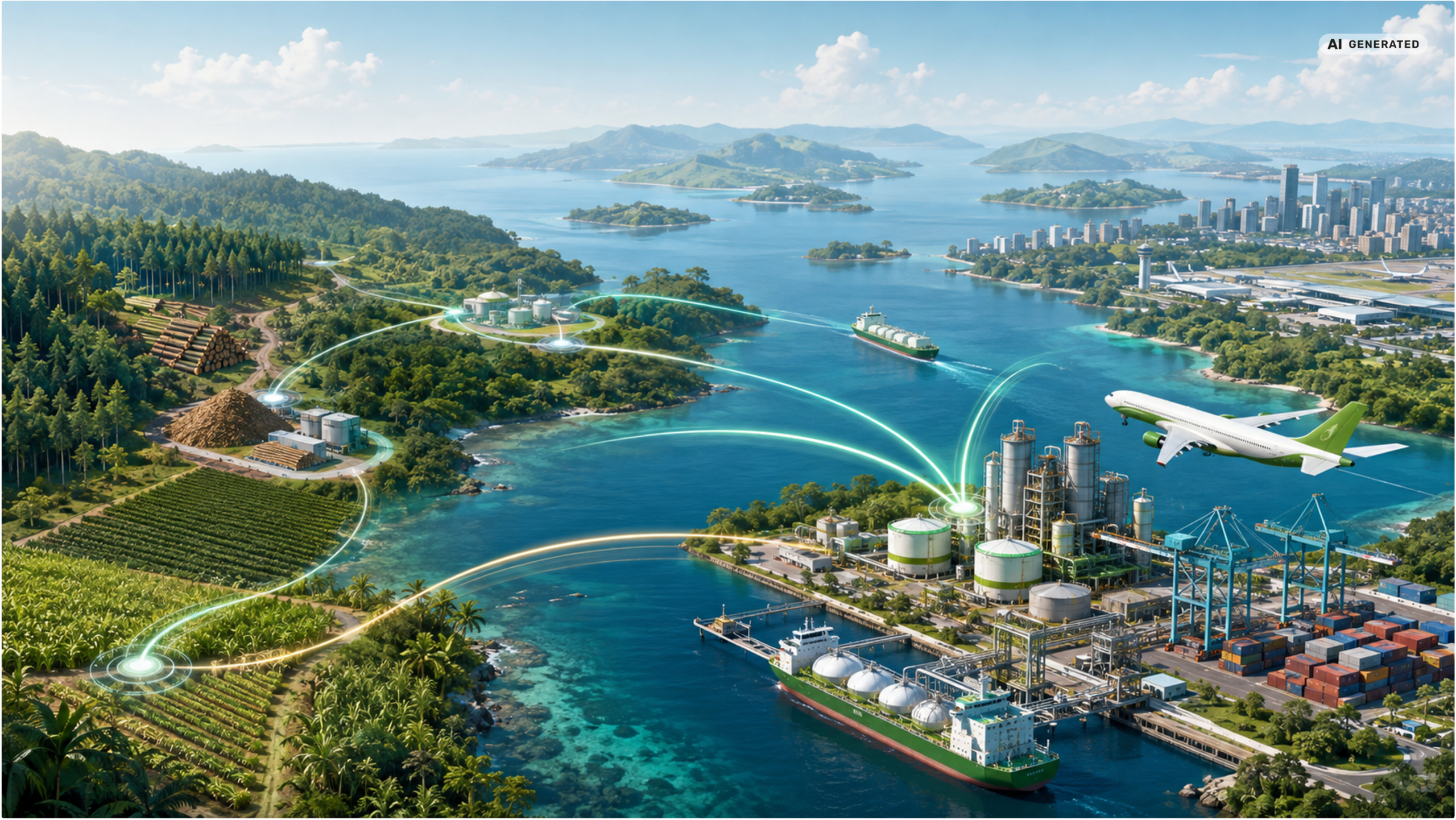
Many Asia-Pacific economies possess abundant biomass potential through forest, agriculture and other resources, with sufficient levels of annual growth to allow for substantial volumes of sustainable supply. At the same time, these economies may have comparatively small demand in the domestic markets, while other economies in the region have significant demand and sophisticated refining capacity but face limited local availability of sustainable feedstock. These complementary strengths suggest that carefully orchestrating an Asia-Pacific region collaboration may provide a more effective pathway to scale than isolated national approaches.
Recent studies examining sustainable aviation fuels similarly conclude that regional collaboration will be essential to create bankable projects, by connecting feedstock-rich countries with long-term demand centres while aligning policy, finance and sustainability frameworks.
The workshop explored the Asia-Pacific as a practical case study for regional bioeconomy development while identifying lessons applicable across other regions of the world.
Workshop Theme
It is rare for a single country to possess all the resources, infrastructure, expertise and markets required to scale a sustainable bioeconomy to meet the demands of net zero transition. Regional collaborations offer an opportunity to combine complementary strengths while improving fuel security, economic resilience and accelerate toward net zero.
Outcomes
The workshop delivered:
- A shared understanding of the opportunities for establishing/strengthening regional bioeconomies.
- Identification of major technical, policy and institutional barriers/challenges.
- A set of priority actions for governments, industry and international organisations.
- Recommendations for future collaborative activities by IEA Bioenergy.
- A workshop report published by IEA Bioenergy.
Presentations
- Mr. Paolo Frankl, IEA – The role of biofuels in the Asia-Pacific Region – an IEA perspective – WATCH THE VIDEO RECORDING
- Ms. Marilique Nijmeijer, FAO Regional Office for Asia-Pacific – Activities to build bioeconomies in Asia and the Pacific from a FAO perspective
- Ms. Morinella Juesine M. Torgo, Board of Investments Philippines – Asia-Pacific renewable biomass resource, strategic reflections from the Philippines
- Mr. Deepak Srivastava, India Ministry of Petroleum and Natural Gas – The case of biofuels in India and perspectives on future collaboration
- Mr. Steve Walker, Terrafolia – Thinking Globally: Looking Beyond Catchments – Building resilient Asia-Pacific biomass supply chains
- Mr. Eric van den Heuvel – Bioenergy as a stepping stone towards a circular biobased economy