
80 Farmers – one biogas system: A cooperative biogas plant in St. Lorenzen
IEA Bioenergy Task 37: Energy from Biomass, is an international working group which covers the anaerobic digestion (AD) of biomass feedstocks including agricultural residues (e.g. manure and crop residues), energy crops, organic-rich waste waters, the organic fraction of municipal of solid waste (OFMSW) and industrial organic wastes. The published report presents a case study of a biogas plant from a farming cooperative in Italy and highlights lessons learned.
Background and Cooperative Model
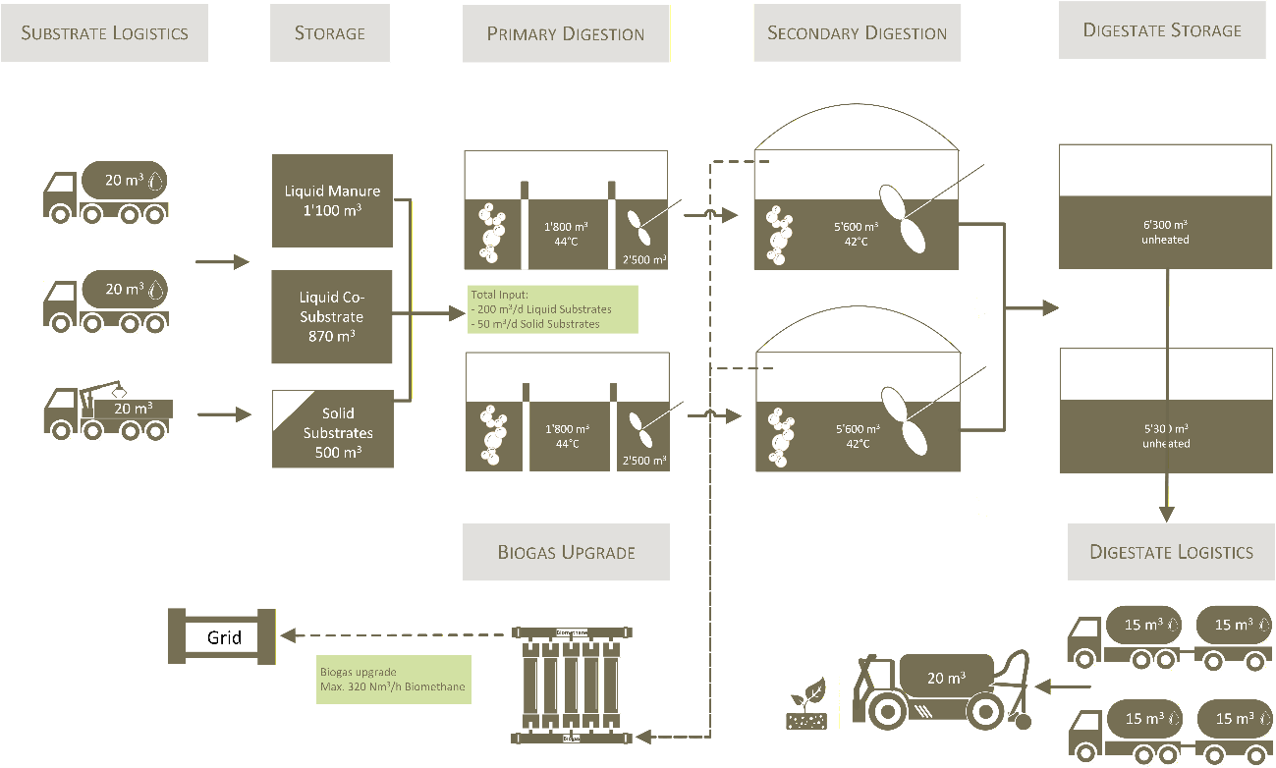
The biogas plant of the Cooperative Bioenergie St. Lorenzen (Italy) is located in the Pustertal Valley, a dairy farming region at 800–1,000 m above sea level. Around 80 farms within a 10 km radius supply biomass from a total agricultural area of 1,300 ha, ensuring short transport distances and efficient logistics.
The cooperative was founded in 2005 after local farmers, inspired by developments in Germany, concluded that a shared biogas plant was more economically viable than individual small-scale systems. The project addressed increasing pressure on manure management in a nitrate monitoring zone while reducing labour requirements through centralized digestate handling. The plant is the only facility in South Tyrol applying digestate by injection technology, servicing around 1,000 ha and eliminating the need for farmers to invest in spreading equipment.
Agricultural cooperatives have a long tradition in South Tyrol, providing an ideal institutional framework. The initiative was led by farmers, supported by technology providers and the Raiffeisen Association. Governance is based on a seven-member board and annual general meetings. Internal regulations ensure sustainable participation, including limits on livestock density and transport distances. The cooperative has achieved strong public acceptance by reducing odour emissions and improving nutrient management, while supporting local employment.
Value Creation
The plant initially operated a 1 MWel CHP unit under a feed-in tariff of €0.28/kWh for ten years, supported by investment grants. Since 2026, it has shifted to biomethane injection into the gas grid, supported by a tariff of €124/MWh. A €7.7 million upgrading unit enables biomethane sales to industrial consumers, increasing annual revenues from approximately €2.3 million to €3 million. Cooperative membership fees cover only about 2% of total revenues, making long-term policy support essential.
Feedstock and Logistics
The plant processes about 70,000 tonnes of biomass annually, up to 90% consisting of liquid and solid manure, supplemented by potato residues, pomace and food industry by-products. Dedicated trucks collect substrates every two to three months and distribute digestate using a self-propelled injector. Efficient logistics, coordinated in real time, reduce emissions and improve nutrient use efficiency.
Lessons Learned
The project demonstrates that cooperative biogas systems require farmer-led initiatives, strong local leadership, sound business planning, reliable technology, and political support. Joint manure management proved to be the key success factor, while replication depends on favourable regulatory frameworks, financial incentives, and suitable local conditions.
Some key findings for policy makers:
- The initiative to form a cooperative for manure digestions must originate from farmers themselves and be organized by the agricultural community.
- A solid business case is required, robust technical implementation is necessary, and the plant must operate at its designed full capacity.
- A suitable and strategically located site is essential and joint manure management has proven to be a key success factor for project realization.
Other reports on energy and biomass: